Xiaomi came in the market of India with its Mi 3 with the flagship
Qualcomm Snapdragon 800 processor at an extremely low price which became the
best smartphone in its price segment and clearly swept all other brands.
Though, the company has concentrated more on its budget and mid-range Redmi
models for a while now. But later on, Redmi became the sub-brand of Xiaomi.
The all-new Redmi K20 Pro
builds on the popular Redmi name but takes Xiaomi back into the flagship
segment. Price starting at Rs. 27,999 with its high-end Qualcomm Snapdragon
855+ processor, this phone undercuts the flagship killer OnePlus, which has
been the go-to brand for affordable flagship phones for quite some time now.
Xiaomi also names it flagship killer 2.0. The Redmi K20 Pro offers many of the
top-end features and capabilities of the OnePlus 7 and even the higher-priced
OnePlus 7 Pro too.
Xiaomi dubbed the ‘Flagship
Killer 2.0', the new Redmi K20 Pro has generated huge amounts of interest in
India. All thanks to multiple leaks and teasers before its official unveiling,
not to mention its price. This is now the lowest-priced smartphone in India
with a Snapdragon 855+ processor, but it also has three rear cameras, an
in-display fingerprint sensor,notch-less FHD+ HDR panel display with a pop-up
selfie camera, and a stylish design.
Redmi K20 Review
Redmi
K20 Pro specifications and software
In
In recent years we have seen that flagships have taken innovative approaches to
design to achieve borderless, notch-less displays. The Asus 6Z₹ 31,999, for
instance, has a rotating camera module, while the OnePlus 7 Pro₹ 44,999 has a
pop-up selfie camera. Obviously, Xiaomi didn't want to be left behind. As a
result, the Redmi K20 Pro has a pop-up selfie camera.
This
allows the big 6.39-inch AMOLED display to enhance the front look of the
smartphone, giving the Redmi K20 Pro a screen-to-body ratio of 91.9 percent.
This is also the first Redmi smartphone for xioami using an AMOLED display. The
FHD+ HDR panel(1080x2340 pixels) on the Redmi K20 Pro has a fantastic viewing
angles and gets bright enough to be legible at outdoors.
So,
it is an AMOLED panel, the Redmi K20 Pro offers an Always-On display feature
that will show you the time and icons of apps with notifications when the the
device is on standby. This phone also has an in-display fingerprint scanner
which is quite fast and responsive.
The
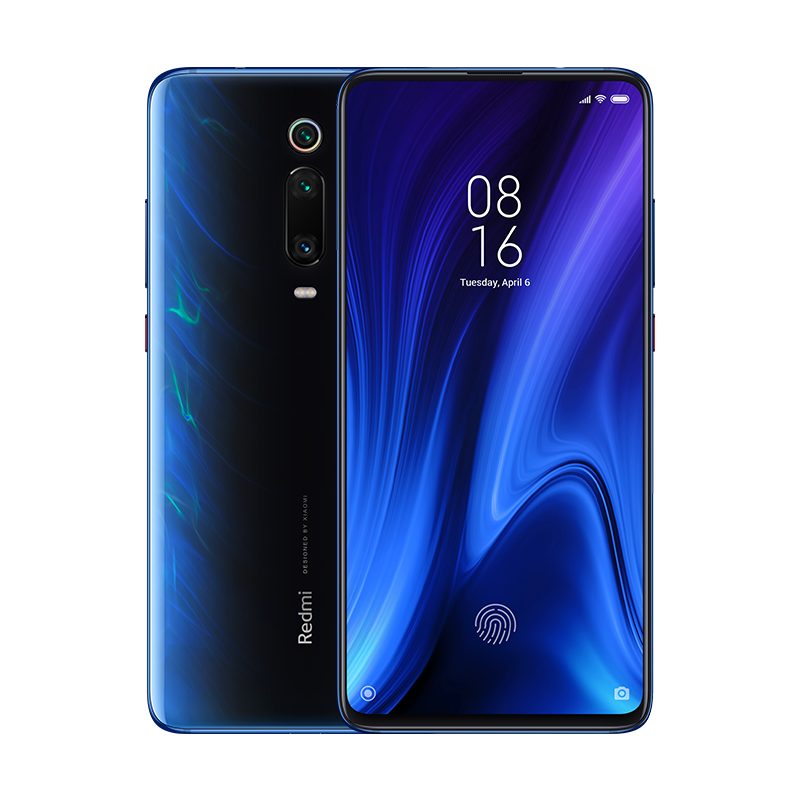
Redmi K20 Pro has a glass-sandwich design with Corning Gorilla Glass 5 at the
front and back and a metal frame in the middle that provides this phone a
premium look and feel. The rear glass is a curved one, which makes the device
comfortable and provides a good grip. Xiaomi has placed the power and volume
buttons on the right side of the phone. The power button is highlighted in red,
which looks good on our Glacier Blue unit.
The
Redmi K20 Pro is being offered in three colours: Glacier Blue, Flame Red, and
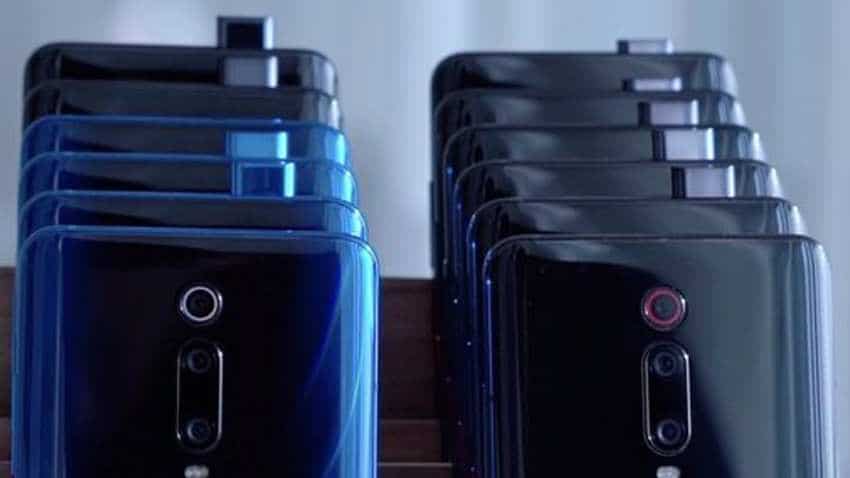
Carbon Black. The Redmi K20 Pro has a 20-megapixel pop-up selfie camera and a
3.5mm audio jack
The
pop-up selfie camera module also has LEDs that light up when it rises. It glows
blue in the Glacier Blue units and red on the other colour variants. If you
don’t like it then you can turn it off. The pop-up module also has a tiny
window on the top which allows the phone to use these LEDs to alert you about
incoming notifications.
The
Redmi K20 Pro has a 3.5mm audio jack at the top along with a secondary
microphone. At the bottom, it has a USB Type-C port, the primary microphone, a
loudspeaker grille, and the SIM tray. The left side of the phone is blank. The
phone does not have any kind of IP rating but Xiaomi says it has a P2i
nano-coating and rubber-lined ports that will help it survive minor water
splashes.
Xiaomi
has opted for a gradient finish on the back of the Redmi K20 Pro. The finish is
darker in the center and transitions into a catchy blue colour at the sides of
our review unit. The pattern has multiple arcs that are visible when light hits
them at the right angle. This is a new kind of design finish and it does manage
to hide fingerprint smudges to quite an extent. However, if you don't like
gradient finishes, the Kevlar-patterned Carbon Black color variant might appeal
to you more.
There
are three cameras on the rear of the Redmi K20 Pro, lined up down the center.
The first sensor is positioned separately, while the other two are placed in a
raised pill-shaped module with a metal rim around it, which should help keep
the lenses safe from scratches. A dual-tone LED flash sits below the cameras.
Redmi K20 Pro specifications and software
It
is now well known that the Redmi K20 Pro is powered by the Qualcomm Snapdragon
855 SoC, after all it was referred to as the “855 flagships” while it was being
developed. The Snapdragon 855 is quite popular and is the first choice for many
manufacturers when designing a flagship device. It currently powers many
top-of-the-line smartphones including the Asus 6Z , OnePlus 7₹ 29,999 , OnePlus
7 Pro , Nubia Red Magic 3₹ 35,999 , Blackshark 2, and Oppo Reno 10X Zoom₹
49,990 .

This
popular SoC has eight CPU cores and is based on a 7nm manufacturing process.
Xiaomi mentions that it has used eight layers of graphite sheets to help
dissipate heat. The Redmi K20 Pro is available in two variants, one with 6GB of
RAM and 128GB of storage priced at Rs. 27,999, and the other with 8GB of RAM
and 256GB of storage priced at Rs. 30,999.
The
Redmi K20 Pro uses UFS 2.1 storage which isn't as fast as the UFS 3.0 storage
on the OnePlus 7 twins. It lacks a microSD card slot, but this shouldn't be a
big issue considering that even the base variant has 128GB of storage.
The
Redmi K20 Pro boasts of DC dimming just like the OnePlus 7 and the OnePlus 7
Pro. This feature uses DC voltage to lower the brightness of the screen instead
of the commonly used Pulse Width Modulation. This decreases flickering and can
be easier on the eyes.
In
terms of connectivity, the Redmi K20 pro phone has dual-band Wi-Fi 802.11ac,
Bluetooth 5, dual GPS, A-GPS, GLONASS, Beidou, and dual 4G VoLTE.
Redmi
K20 Pro Android Pie Redmi K20 Pro ReviewThe Redmi K20 Pro runs MIUI 10 on top
of Android 9 Pie
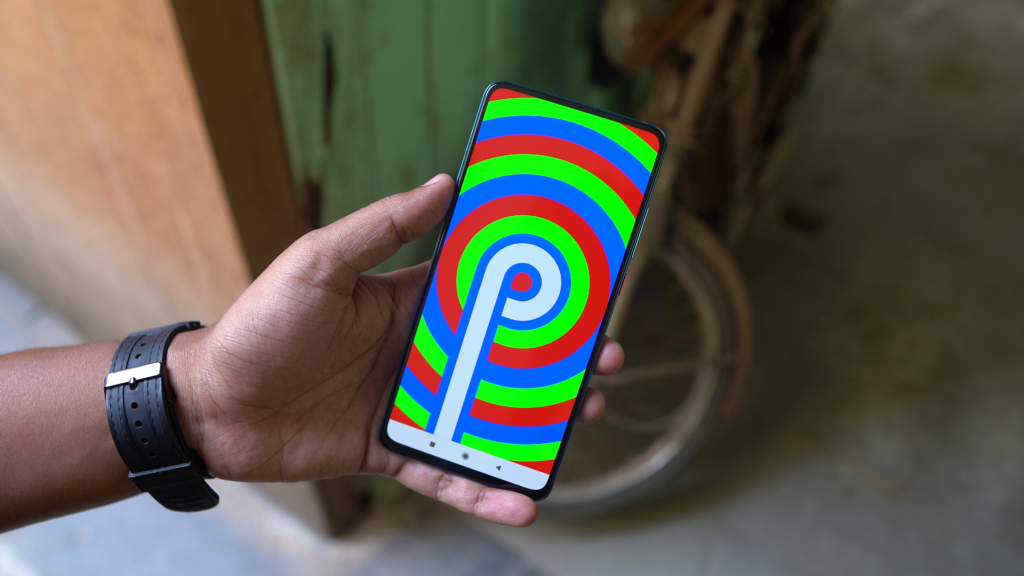
Like every other Redmi smartphone, the K20 Pro runs MIUI 10 on top
of Android 9 Pie. The Redmi K20 Pro supports themes that let you customize the
look of the UI. It also gets a system-wide dark mode that takes advantage of
the AMOLED display to save power and is easier on the eyes when using the phone
at night.
This implementation of MIUI has an app
drawer thanks to the use of Poco Launcher, which was first seen on the Poco F1₹
15,890 but is also available as a standalone app via the Play Store. The
Redmi K20 Pro also has a few preinstalled apps including games like Ludo Master
and Block Puzzle Guardian, as well as Facebook, Dailyhunt, Amazon, Google Duo,
Paytm, and WPS Office. There are also several Xiaomi apps such as Mi Community,
Mi Music, Mi Video, Mi Pay, Mi Store, and a Security app. These apps tend to
push notifications, but we've observed that the frequency of these spammy
notifications is slightly less compared to other Xiaomi phones.

The
Redmi K20 Pro also features Game Boost 2.0, which claims to improve gaming
performance by managing your Internet connection, reducing latency, and
improving the touch response of the panel. This Game Boost mode is activated
through the Security app, which is the last place anyone would look for it.
Xiaomi should have implemented it in the Settings app or offered it as a
separate standalone app. This mode lets users adjust the touch response and
sensitivity of the panel to repeated taps for each game individually. It also
claims to enhance visuals by making darker areas brighter in games.
Gesture
navigation is available as well, and you can ditch the traditional three-button
Android navigation scheme in favor of swipe gestures. Xiaomi also gives you six
sound effects to choose from when the camera module is being raised. Digital
Wellbeing, a popular feature of Android that helps you keep tabs on your
smartphone usage was missing from the Redmi K20 Pro at the time of this review.
Redmi K20 Pro performance and battery life
The
Redmi K20 Pro is a fast smartphone and at no point did we notice any lag or
stuttering when using it. It is quick to load apps, and with 8GB of RAM, our
review unit could multitask with quite a few apps running in the background.
The
Redmi K20 Pro has an in-display fingerprint scanner as well as the pop-up
selfie camera for face recognition. We found the in-display fingerprint scanner
to be quick to unlock the smartphone, but it isn't as quick as the one on the
OnePlus 7. The selfie camera module pops up to scan your face when needed and
retracts itself after a successful scan. This makes face recognition a little
slower than using the in-display fingerprint scanner. The Redmi K20 Pro also
has drop protection, so the module can be retracted quickly when the phone's
gyroscope and accelerometer detect a fall.
We
watched several HDR videos on YouTube that could take advantage of the HDR
display. It is bright and has good viewing angles. The single bottom-firing the
speaker is loud but we found it to be tinny at higher volumes. We wished that
this phone had stereo speakers like OnePlus 7.
Redmi
K20 Pro SIM tray Redmi K20 Pro ReviewThe Redmi K20 Pro is a dual SIM device but
does not offer expandable storage.
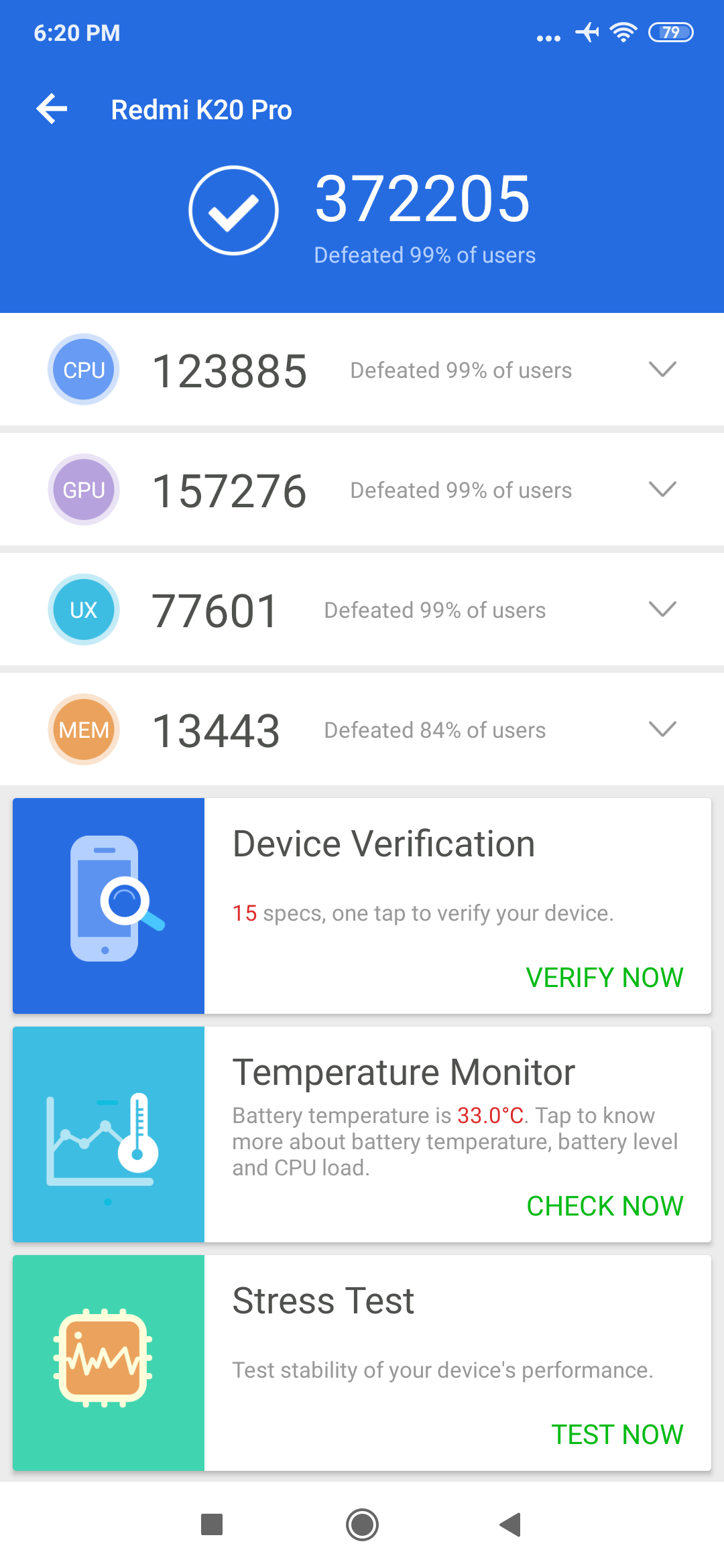
We ran a couple of benchmarks to
see where the Redmi K20 Pro stands in comparison to other devices powered by
similar hardware. In AnTuTu, the phone managed to score 368,332 points which
places it between the Asus 6Z, which scored 355,965, and the OnePlus 7, which
managed 375,219 when we tested it. In Geekbench 4's single-core and multi-core
tests, the Redmi K20 Pro scored 3,421 and 10,775 respectively.
As for graphics benchmarks, the
Redmi K20 Pro managed to hit 60fps in GFXBench T-Rex and 57fps in the Manhattan
3.1 scene. This phone also scored 5,620 in 3DMark Slingshot Extreme OpenGL. We
found these scores to be on par with those of the OnePlus 7.
The Redmi K20 Pro packs in a
4,000mAh battery and supports up to 27W fast charging. However, it only ships
with an 18W charger in the box. Xiaomi also announced a 27W SonicCharge adapter
at the Redmi K20 series launch event, and it is priced at Rs. 999. This should
be on your list if you want to speed up the charging process and don't already
have a high-powered charger.
We played PUBG Mobile on the
Redmi K20 Pro and found that the game defaulted to the High preset with
graphics set to HD and the frame rate set to High. We bumped these the quality
up to HDR and the frame rate to Ultra. Even with these higher settings, the
game ran smoothly. We played a full match at these settings, and after around
30 minutes, the battery level had dropped by 13 percent. The phone was only
slightly warm to the touch.
In our HD video loop test, the
smartphone managed to clock 19 hours and 26 minutes of continuous runtime. With
our day-to-day usage, which consisted of using an active WhatsApp account,
using Google Maps for navigation, running benchmarks, and taking camera samples
for a full day, the phone still had 50 percent left in the battery. If you are
frugal with your usage, you should be able to stretch beyond a day and a half
or even two days.
When the battery did run out, we
were able to charge it up to 45 percent in 30 minutes and to 80 percent in an
hour using the bundled 18W charger.
Redmi K20 Pro Charging Redmi K20
Pro ReviewXiaomi bundles an 18W charger along with the Redmi K20 Pro.
Redmi K20 Pro and cameras
The Redmi K20 Pro has a triple
camera setup at the back. The primary camera uses a 48-megapixel Sony IMX586
sensor with an f/1.75 aperture and 1.6-micron pixels. There's also a
13-megapixel ultra-wide-angle camera with a 124.8-degree field of view and an
f/2.4 aperture. The third camera is an 8-megapixel unit with a 2x optical
telephoto lens and f/2.4 aperture. The Redmi K20 Pro offers laser autofocus as
well as PDAF. At the front, this phone has a 20-megapixel pop-up selfie camera
which has sapphire glass to prevent scratches.
Xiaomi hasn't changed a lot in
its camera app compared to what we've seen before, and it is easy to cycle
between different camera modes. The Camera app has multiple modes including
Short Video, Slow Motion, Portrait, Night, Panorama and Pro, other than the
standard photo and video modes. There are quick toggles to switch between the
three different camera sensors. The app is capable of detecting what the camera
is pointed towards thanks to its AI capabilities.
The
camera uses 4-in-1 pixel-binning to deliver 12-megapixel shots by default, but
you do have the option to take photos at the full 48-megapixel resolution. In
Portrait mode, the K20 Pro uses the telephoto lens which means you have stand a
bit far back from your subject. There is a quick toggle called Full Body Mode
which you can tap if you want to take a full-body portrait of your subject.
This makes the phone use the primary sensor instead.
Photos
taken with the Redmi K20 Pro in daylight had good amounts of detail, and even
text on objects at a distance was legible. Xiaomi has implemented distortion
correction for the ultra-wide camera. Barrel distortion is corrected by
cropping the side of the frame, but photos come out appearing stretched at the
edges. Photos taken using the telephoto camera were bright, but not as much as
those taken using the primary camera.
Photos
taken in low light looked good as is, but fine grain was visible on zooming in.
The telephoto camera also delivered good output at night but we found that
shots taken with the wide-angle camera had more noticeable grain and weren't as
sharp. Close-ups taken in low light were good, and images looked crisp. The
phone could focus quickly thanks to laser autofocus. There's a dedicated Night
mode as well, which takes multiple-exposure shots. Photos taken with Night mode
were brighter and had slightly better details.
Selfies
taken with the Redmi K20 Pro were good, and the phone managed to expose
subjects as well as backgrounds properly. The front camera produced good
amounts of detail and managed to get the get the colour tone right. We had to
be a little conscious of how we angled the phone when shooting with the pop-up
selfie camera in order to keep our faces framed correctly.
Video
recording maxes out at 4K 60fps for all three rear cameras and 1080p 30fps for
the selfie shooter. However, you can't switch between sensors while recording
videos. When recording video at 1080p 30fps, we noticed a mild shimmer effect
which was acceptable. Videos shot at 4K had a pinkish tinge to them and the
colours were saturated, which made them look artificial. Video shot with the
selfie camera wasn't stabilised.
Verdict
The
K20 Pro is Xiaomi's flagship model in the Redmi range and has a lot on offer at
an affordable price. Yes, it lacks wireless charging and an IP rating, but that
can be forgiven considering its lower price tag. The Redmi K20 Pro has the
powerful Qualcomm Snapdragon 855 SoC and the variants have generous amounts of
RAM and storage for their prices. The pop-up selfie camera and an AMOLED
display are firsts for a Redmi device.
The
Redmi K20 Pro does offer a versatile set of cameras at the back, and they did
manage to do a good job in most lighting conditions. While the 4,000mAh battery
is not the biggest we've seen paired with the Snapdragon 855, the resultant
battery backup of over a day-and-a-half is more than acceptable.
Comments
Post a Comment