
The
Redmi Note series is a popular series of Xiaomi. The Redmi Note 4G was the
first model of this series launched back in 2014 and became the first model
that sold in huge numbers in the Indian market. Redmi Note 4 was also a phone
that became so popular. Xiaomi's Redmi Note 7 Pro is another highlight of the
series, according to the company. After the great success of the Redmi Note 7
Pro, Xiaomi has just launched the all-new Redmi Note 8 Pro. While this new
smartphone has been launched nine months after its predecessor, it claims to be
better in every measurable way. Will the new Redmi Note 8 Pro be able to
maintain the charm of the Note series. Let’s find out.

Design
Xiaomi
has changed the design of the Redmi 8 series of smartphones, and the Redmi Note
8 Pro also comes with big changes. The new smartphone has a bigger display
measuring 6.53 inches compared to the 6.3-inch display on the Redmi Note 7 Pro.
It has a waterdrop notch at the top which has the 20-megapixel selfie camera.
The earpiece is placed just above the display and is finished in black, which
covers it well with the black bezel at the top. The screen is protected by
Corning Gorilla Glass 5.
The left
side of the Redmi Note 8 Pro has two trays: one has a single Nano-SIM slot
while the other has the second Nano-SIM slot and a dedicated microSD card slot.
Xiaomi has specifically added the microSD card slot for the Indian market as
the Chinese variant doesn’t have this feature.
Xiaomi
has finally managed to reduce the bottom bezel’s thickness on the Redmi Note 8
Pro with the help of a flexible chip-on-film display driver that bends
downwards. The power and volume buttons are placed on the right side of the phone.
We found the power button to be well-positioned while the volume rocker needed
a little bit of a stretch to reach.
At the
bottom, the Redmi Note 8 Pro got a USB Type-C port, loud and clear speaker
along with a primary microphone. The IR blaster and secondary microphone are at
top. Xiaomi provides a clear plastic case along with an 18W fast charger in the
box.
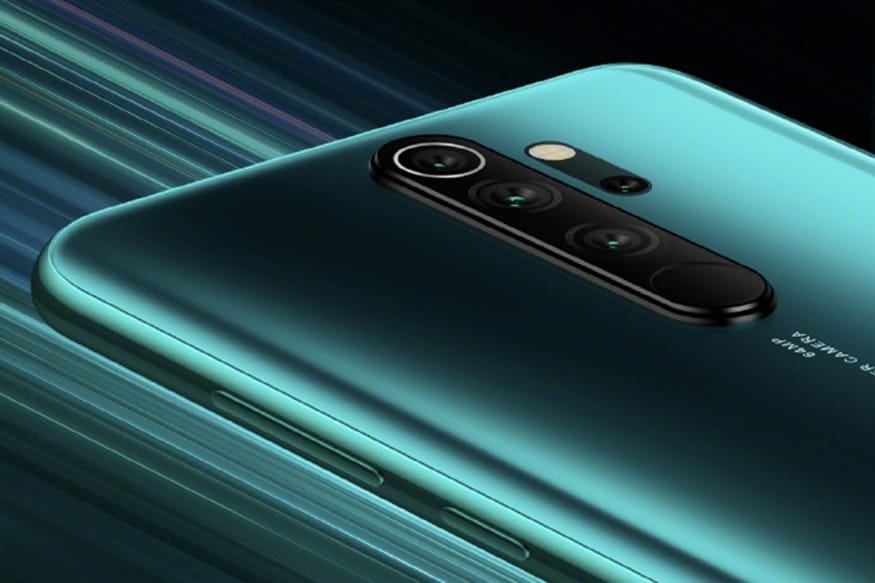
The back
of the phone is made out of Corning Gorilla Glass 5 and is curved on the sides
to make it easy to grip. Xiaomi has placed the fingerprint scanner below the
camera module. We also found that the fingerprint scanner is slightly higher
than the perfect position. Next to the camera module is the LED flash along
with a separate macro camera positioned under it.
Cameras
The
Redmi Note 8 Pro got a significant bump in terms of camera hardware compared to
the Redmi Note 7 Pro. Xiaomi has effectively doubled the number of cameras
compared to its predecessor. The Redmi Note 8 Pro comes with a 64-megapixel
primary sensor with an of f/1.79 aperture and 0.8-micron pixels. This sensor
takes 16-megapixel shots in the default mode as is does 4-in-1 pixel binning.
The
second sensor in the line-up is an 8-megapixel ultra-wide-angle camera with an
f/2.2 aperture and a 120-degree field of view. Xiaomi has also put a
2-megapixel macro camera. The fourth sensor is a 2-megapixel depth sensor. At
the front, this phone has a 20-megapixel selfie shooter.
Xiaomi
hasn't made any major changes to the camera app on the Redmi Note 8 Pro, and it
is almost the same like other Xiaomi phones. It has a button that lets you
switch between the primary camera and the wide-angle one. This button also
offers 2X zoom which is achieved digitally. The toggle to switch to the Macro
camera is at the top alongside the AI button.

At the
top, there are many options like HDR, AI, the flash, and filters. The
smartphone has Portrait, Night, Panorama, Pro, Short video, Slow motion, and
64MP shooting modes, apart from the standard Photo and Video modes. The
daylight performance is awesome. The photos are clear and sharp. The night
experience is also good.
In low
light, the AI was quick to recognize scenes and set the camera accordingly. The
phone captured decent levels of detail with its primary camera at night. Text
at a distance was legible, but we did notice fine grain on zooming in. With
Night mode enabled, the smartphone was able to capture brighter images with
slightly better details, but we had to be perfectly still to get a usable shot.
Shots
taken using the Macro camera had good detail, but the resolution is 2 megapixels
only. Xiaomi told that the macro camera has been positioned just below the
flash in order to use the flash as an illuminator to avoid shadows when taking
macros with the phone really close to your subject. We would have liked the
option to set the intensity of the flash.
In
portrait mode, the Redmi Note 8 Pro does give you the option to set the level
of blur before taking a shot. The phone managed good separation between the
subject and background. Colours were also accurate when shooting portraits.
The
single selfie camera returns sharp shots during the day but we found the
contrast to be slightly boosted. You do have the option to take selfie
portraits, and these showed good separation as well. Selfies taken in low light
had slightly lower detail but were worthy of going on social media directly.
Video
recording is capped at 4K 30fps for the primary camera and 1080p 30fps for the
selfie shooter. You can also shoot videos using the wide-angle camera or macro
camera. Videos shot during the day were stabilized and the phone could meter
light properly. 4K footage had boosted colours and the output wasn't
stabilised, which is acceptable for the price. Video shot in low light had a
visible shimmer effect in the output and could do with some improvement.

Specifications And Software
The
Redmi Note 8 Pro has a big 6.53-inch display with a Full-HD+ (1080x2340 pixels)
resolution and HDR support. It is bright enough when outdoors with a maximum
brightness of 500 nits.
Xiaomi
chooses the MediaTek Helio G90T SoC which has seemingly been specifically
designed for gaming. This processor competes with the Qualcomm Snapdragon 730G
SoC. The Helio G90T is an octa-core processor with two performance ARM
Cortex-A76 cores clocked at 2.05GHz and six efficiency Cortex-A55 cores clocked
at 2.0GHz. For graphics, it has an ARM Mali-G76 MC4 integrated GPU clocked at
800MHz.
Xiaomi
has launched three variants of the Redmi Note 8 Pro with the base variant having
6GB of RAM and 64GB of storage priced at Rs. 14,999. The second variant comes
with 6GB of RAM and 128GB of storage and is priced at Rs. 15,999. The top
variant of the Redmi Note 8 Pro has 8GB of RAM and 128GB of storage and is
priced at Rs. 17,999.
Xiaomi
offers the Redmi Note 8 Pro with UFS 2.1 storage instead of EMMC 5.1 which is
common at these price points. Good news is that the storage is expandable in
this device by using a microSD card of up to 512GB.
Connectivity
options on the Redmi Note 8 Pro include Bluetooth 5, Wi-Fi 802.11ac, dual 4G
VoLTE, and four navigation systems. The phone packs in a 4,500mAh battery.
Xiaomi also mentions that the Redmi Note 8 Pro has a self-cleaning speaker
which plays a low-frequency tone to try to eject dust.
Xiaomi gives
you an option switch from the
traditional three-button navigation layout to swipe-based navigation. Since the
MediaTek Helio G90T supports dual-wake, Xiaomi has added support for Amazon's
Alexa along with Google Assistant. That's right, there are two assistants on
the device that are ready to listen to their respective wake phrases and spring
into action. It has both the Google Assistant and Alexa that works good as
expected.

Performance And Battery
Life
The
Xiaomi Redmi Note 8 Pro is the first smartphone in India having the all new
MediaTek Helio G90T processor. We're using the top variant which has 8GB RAM
and 128GB storage. We were curious to see how it fares compared to its
Snapdragon rivals. We did not face any lag or stutter on this device while
using it at its extreme level. It launches apps quickly, and 8GB of RAM make
sure that the smartphone can multitask without killing apps in the background.
We have
found that the fingerprint scanner is really quick to unlock the smartphone.
Face recognition is also fast and only a glance to unlock the device. The
display gets bright enough outdoors, and the speaker is loud enough to enjoy
the content you are watching.
In
AnTuTu, the Redmi Note 8 Pro managed to clock 2,27,626 which is higher than the
2,14,687 scored by the Redmi K20 priced at ₹ 19,999 with its Snapdragon SoC.
The Redmi Note 8 Pro also managed 273 and 943 in Geekbench 5's single-core and
multi-core tests respectively. These scores are higher than those of the
Snapdragon 730 SoC, and come very close to scores of the Snapdragon 730G. In
graphics benchmarks, the Redmi Note 8 Pro managed 58fps and 15fps in GFXBench's
T-Rex and Car Chase tests respectively.

We
played PUBG Mobile and Call of Duty Mobile to test it’s performance. PUBG
Mobile defaulted to the High preset with graphics set to HD and the frame rate
set to High. The smartphone managed to run the game at these settings without
any issues. We played the game for 1 hour and noticed a 16 percent battery
drain. The Redmi Note 8 Pro was little-bit heated at the end of this test. We
bumped the graphics up to HDR and frame rate to Ultra, and the smartphone could
run the game at these settings without any problem. However, it got rather hot
after playing for a couple to minutes at these settings.
Battery
life is at awesome on the Redmi Note 8 Pro if you consider the kind of
performance it packs. With our usage, that consists an active WhatsApp account,
taking a few camera samples, and playing PUBG Mobile and Call Of Duty Mobile,
we were left with around 36 percent left at the end of the day. Xiaomi provides
an 18W charger in the box which charged the big battery to 100 in 1 hour and 36
minutes.

Conclusion
The
Redmi Note 8 Pro is awesome as its predecessor, the Redmi Note 7 Pro , was. To
give it a fighting chance, Xiaomi has equipped it with powerful hardware
previously missed in this price segment. The MediaTek Helio G90T can easily fulfill
your gaming needs. It swipped the Snapdragon 712 as well as the Snapdragon 730
SoC in terms of performance, making it an easy pick for someone looking for agamin
device in this price segment. However, there seems to be a bit of a tradeoff,
as we found that this processor wasn't as power-efficient as the Snapdragon 675
that powers the Redmi Note 7 Pro, and this was proved in our battery tests.
Xiaomi
has beefed up the camera hardware to compete with other smartphones, most
notably the Realme 5 Pro and Realme XT which offer good camera performance with
a similar variety of sensors in the same price range. But we feel that the
Redmi Note 8 Pro could do with a few camera tweaks to extract the best out of
it.
At the
end, the Redmi Note 8 Pro qualifies as a suitable successor to the Redmi Note 7
Pro. Xiaomi has made it an awesome deal by pricing it aggressively and
undercutting the Realme XT. For those looking for a gaming device, the Redmi
Note 8 Pro is an easy pick.
Comments
Post a Comment